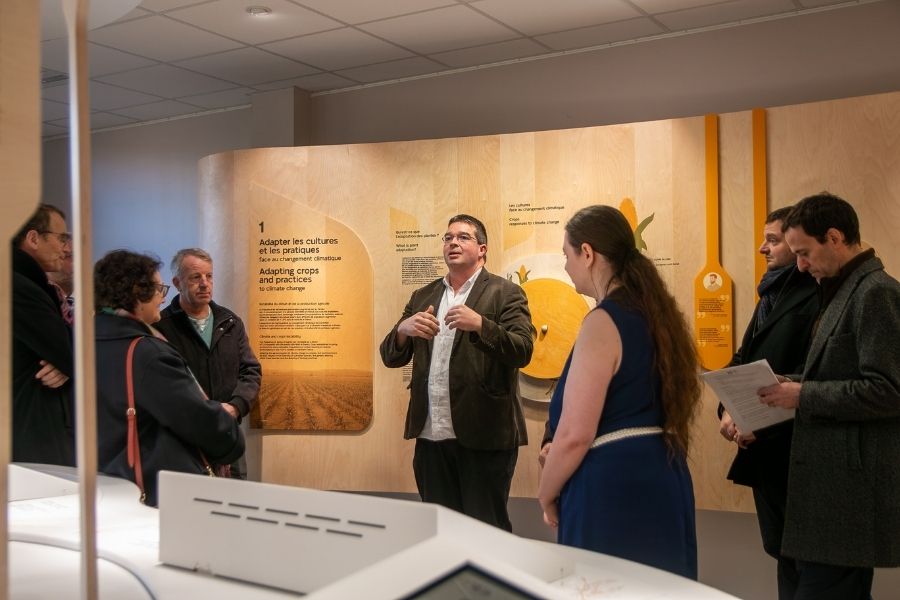
Agroecology is a new interactive exhibition space at UniLaSalle, located in the heart of the historic farm on the Beauvais campus, where visitors can learn about the major challenges of the agroecological transition in a hands-on way. Designed primarily for middle and high school students, it highlights the sciences, practices, and professions that are shaping the agriculture of tomorrow.
Faced with climate, food, and energy challenges, agricultural transition is more than ever at the heart of concerns. How can we produce differently while preserving biodiversity, soil, water, and the climate? These are the questions that Agroecology, a new scenographic space designed by UniLaSalle to make the major challenges of agricultural transition accessible to as many people as possible, seeks to answer.
Designed as an educational and scientific tool, Agroecologia also aims to introduce visitors to the diversity of sciences and techniques necessary for agroecological transition, as well as the professions and training programs related to it.
The goal? To inspire vocations and give young people the keys to understanding the agriculture of tomorrow.
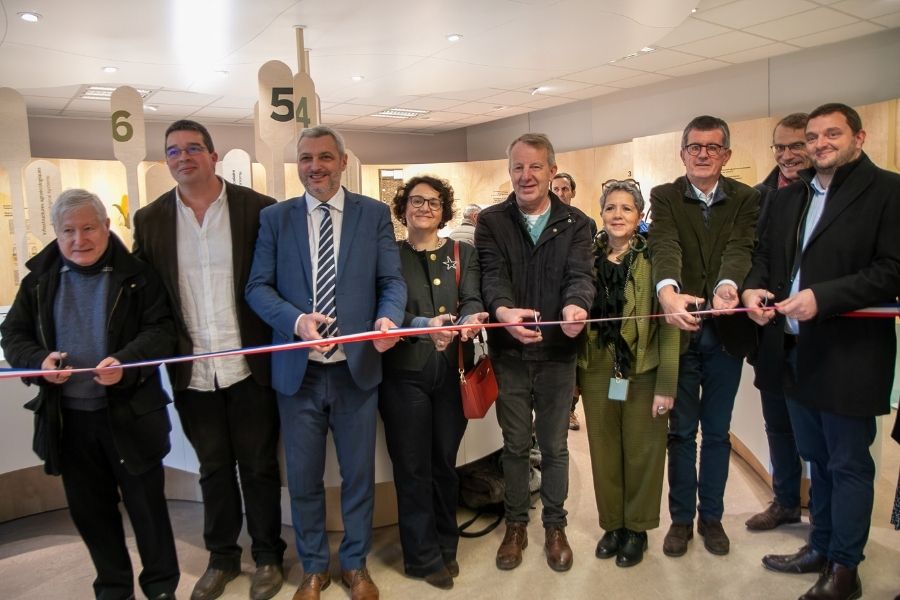
The space was officially inaugurated on Monday, December 15, at 11 a.m. by Michelle Bubenicek, Vice-Chancellor for Higher Education, research, and innovation for the Hauts-de-France academic region, and Aymeric Bourleau, Vice President of the Beauvaisis Urban Community, both of whom were present alongside Philippe Choquet, Director General of UniLaSalle.
7 modules to explore the different aspects of agroecology
Located in the heart of UniLaSalle's historic farm, the 81 m² exhibition offers a journey combining science, observation of living organisms, and reflection on agricultural practices.
It is structured around 6 thematic modules:
- Crops and practices adapted to climate change
- Soil: an ally of biodiversity, climate, and our food supply
- Designing agrosystems that benefit the climate and biodiversity
- Producing milk while mitigating climate change
- Recycling effluents and waste to produce renewable energy and fertilize crops
- Farming with nature: the functions and services of agroecological infrastructures
A 7th module, located at AgriLab and accessible only during class visits, completes this program and highlights precision agriculture and new technologies at the heart of the agroecological transition.
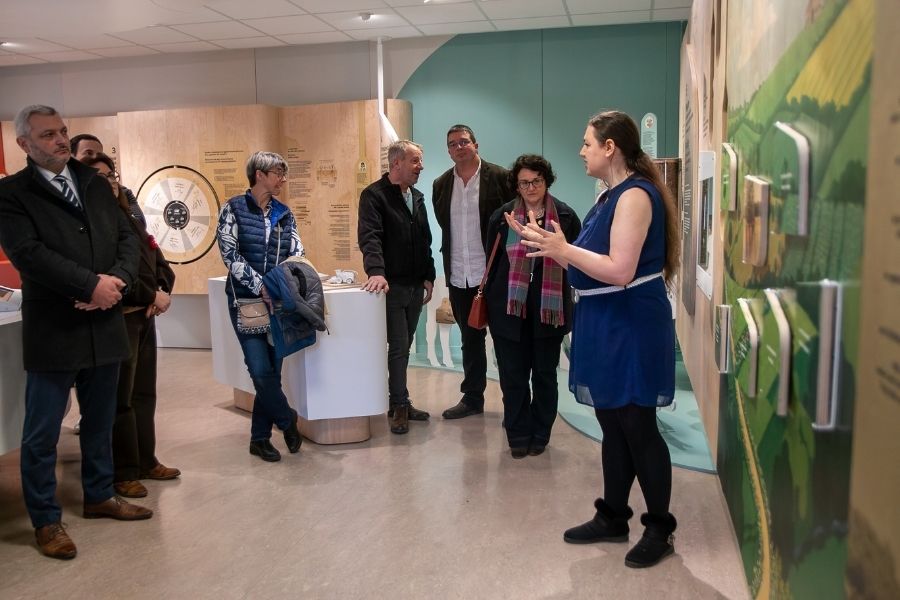
Designed by UniLaSalle scientists with the support of museum curators and illustrators, Agroecology was conceived to stimulate curiosity and scientific thinking in young people. A science mediator is on hand to adapt the content to the students' academic program and assist teachers in preparation for the visit.
Priority given to young audiences... but a space open to all
The priority target audience is middle and high school classes, starting in 8th grade. Students are invited to question agricultural practices, discover innovative solutions, and better understand the challenges of agroecology.
The scenography can also accommodate adults in continuing education or the general public during open houses or dedicated events.
“We are facing a major recruitment challenge in agricultural education. This new space is particularly relevant to this challenge, as the Hauts-de-France region is France's leading agricultural region and UniLaSalle is the largest school under the Ministry of Agriculture.”
Philippe Choquet, Managing Director of UniLaSalle
A structuring regional project for the agriculture of tomorrow
With an investment of €476,000, financed by the Hauts-de-France Region, the European Union under the ESF+ program, the Beauvaisis Urban Community, and UniLaSalle, Agroecologia is fully in line with regional dynamics in favor of agroecological transition.
To take things even further, a mobile exhibition will reinforce this initiative in early 2026, bringing the content closer to audiences throughout the Hauts-de-France region.
“This scenography will raise awareness among middle and high school students about the advantages of the UniLaSalle campus, but also enable them to discover all the challenges facing agriculture in the future. It is fully in line with the territorial strategy of the Beauvaisis Urban Community, which is based on strengthening agriculture, technology, digital agriculture, and the bioeconomy.”
Aymeric Bourleau, Vice President of the Beauvaisis Urban Community
An innovative tool for teaching and research
Beyond simply imparting knowledge, Agroecology promotes concrete solutions for changing practices, drawing on research, innovation, and digital technologies.
“Agroecology offers everyone a unique tool that shows that the future of agriculture and agri-food lies in innovative solutions. Through this scenography, UniLaSalle demonstrates that innovation can be scientific but also educational.”
Michelle Bubenicek, Deputy Rector for Higher Education, Research, and Innovation for the Hauts-de-France academic region
With Agroecology, UniLaSalle confirms its ambition: to support the agroecological transition by training, inspiring, and raising awareness among the generations who will build the agriculture of tomorrow.
Learn more about Agroecology and how to visit