


From May 6 to 10, geosciences and environmental science students from UniLaSalle explored the Massif Central: a future lithium mine, gold panning in the river, and ancient Roman baths. The kind of week that gives meaning to a calling.
We often say that you don’t become a geologist in a classroom. It’s true, and this field trip to the Massif Central is further proof of that. For five days, students from the SEG-SGA Student Chapter and the Opale association went to see, touch, and understand what they study the rest of the year. Organized by the students themselves, the trip brought together students from first through fourth year, a sign that curiosity about the field can’t be commanded—it’s passed on. Here’s what they brought back.
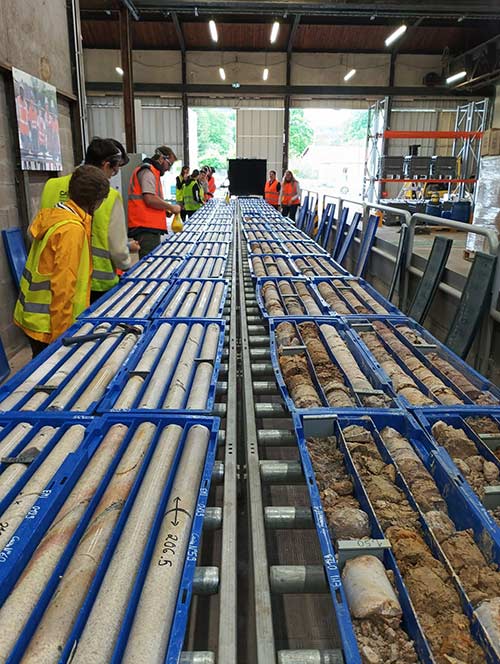
Échassières: The Birth of French Lithium
The first stop—and undoubtedly the most memorable of the week—was the Échassières kaolin quarry, operated by Imerys. This is where the EMILI project, France’s first lithium mine, is being developed. Four geologists welcomed the group to present the ore, the geological context, and this project, which could play a major role in the decarbonization of our transportation sector. In the core collection, the students examined the granite core sample by core sample, searching for lepidolite, the mica that contains the lithium for our future batteries.
For students in the Mineral and Energy Resources track of the Integrated Master Geosciences and Environment, seeing this project with their own eyes changes everything. In class, we can describe the process from drilling to geochemical analysis in the lab, and explain how a rock’s lithium content is determined. But to truly understand what a site in operation since 1848 represents, and the significance of what is happening there today for France, you have to be there. That day, the lesson came to life.
A full day in search of gold
The next day was all about gold, with a full day dedicated to this single metal. The group started at the Maison de l'Or in Le Chalard and its museum, which tells the story of gold mining in the region. Three sites followed: a Gallic gold mine, the old Bourneix mine, and the Renardière fault. Enough to show that humans have been digging here for a very, very long time.
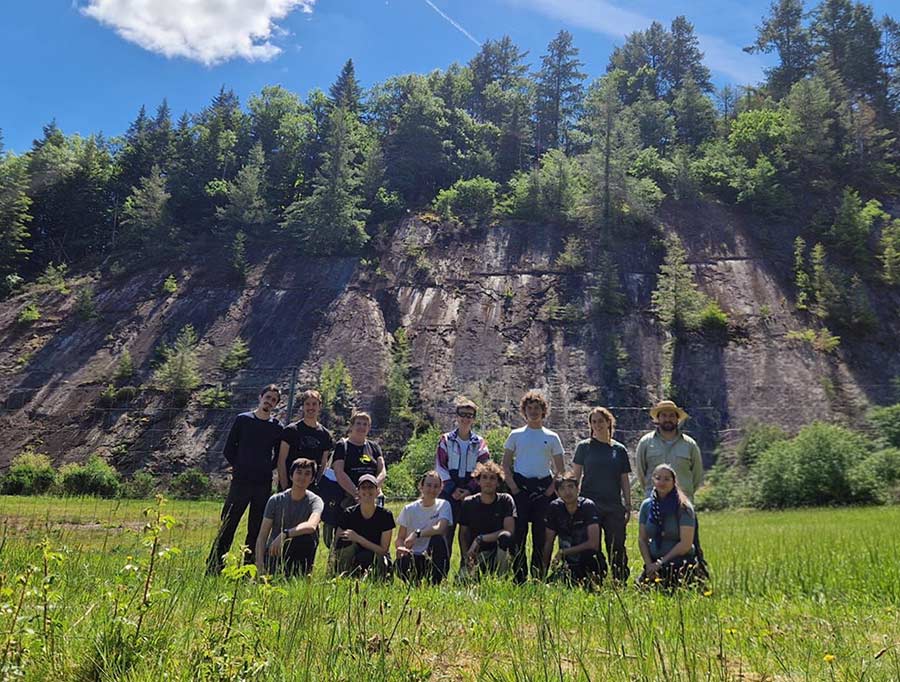
In the afternoon, with their boots in the water, the students tried their hand at panning for gold in a stream in Jumilhac, guided by an enthusiast and former gold mining geologist. Far from being mere folklore, panning remains a very real prospecting technique: it is by analyzing the sediments that one can detect the presence of a deposit. Everyone left with their own flakes at the bottom of the pan. A small reward, and above all a true lesson in patience—the very same patience required in the field starting with the Bachelor’s degree in Geosciences and Environmental Engineering, where the first weeks of field school begin right in the first year.
Volcanoes, Hot Springs, and Roman Baths
You can’t cross the Massif Central without encountering its volcanoes. The group visited the old pozzolan quarry at the summit of Lemptégy, before stopping at two natural features that reveal more about the subsurface than any lengthy explanation: a natural bitumen seep at Puy de la Poix, near Clermont-Ferrand, and a thermal spring in Saint-Floret. Two upwellings from the depths, two faces of a land that has never truly stopped working.
The final kilometers led the students to the Cornadore Caves in Saint-Nectaire, ancient Roman thermal baths shaped by hydrothermal activity, and then around Lake Pavin. This nearly perfect lake hides a violent origin: a phenomenon of phreatomagmatism, when magma meets water, the encounter explodes, and all that remains is a crater. A final site to remind us that geology is also about spectacular stories—provided you know how to read them.
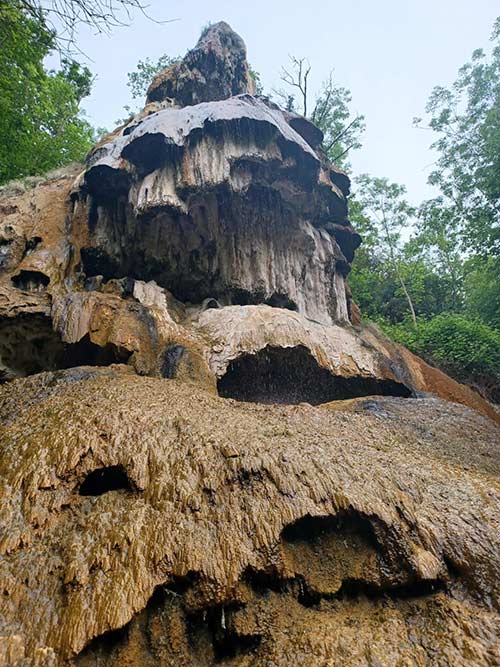
Five days, hundreds of kilometers, and students who returned a little different from the ones who left on May 6. That’s what we’re really after in our Geosciences and Environment programs, whether it’s an engineering degree or a bachelor’s degree: unforgettable weeks in the field, where you finally understand why you chose this path. A big congratulations to the students of the SEG-SGA Student Chapter and Opale, who organized everything themselves. The next generation is inspiring.


