An educational and interactive space to discover agroecology.
Come and discover the science, techniques, and professions of agroecology through a unique educational tool!
Inspired by the realities of a mixed farming and livestock farm, Agroecologia explores the fundamentals and challenges of agroecology through a journey combining science, observation of living organisms, and reflection on agricultural practices.
Located in the heart of the former UniLaSalle farm, our scenography offers an exploration of agroecology through interactive activities centered on the farm and the agrosystem. A mobile version is also available for schools that are unable to visit our Beauvais campus.
It is aimed at a diverse audience and can be adapted to different levels of learning: middle school, high school, undergraduate, or as part of continuing education for professionals.
For middle and high school classes, a free discovery tour is available, with bus transportation provided for schools in the Oise department.
Why is our Agroecology exhibition unique?
- It was designed by an interdisciplinary team bringing together scientists from UniLaSalle, creative professionals, and specialists in museography and scientific mediation.
- It provides solutions that combine agricultural production in a context of climate change, greenhouse gas emission reduction, and ecosystem preservation.
- It encourages critical and logical thinking in the choice of agroecological practices and their combinations.
- It draws on the latest research findings from UniLaSalle researchers.
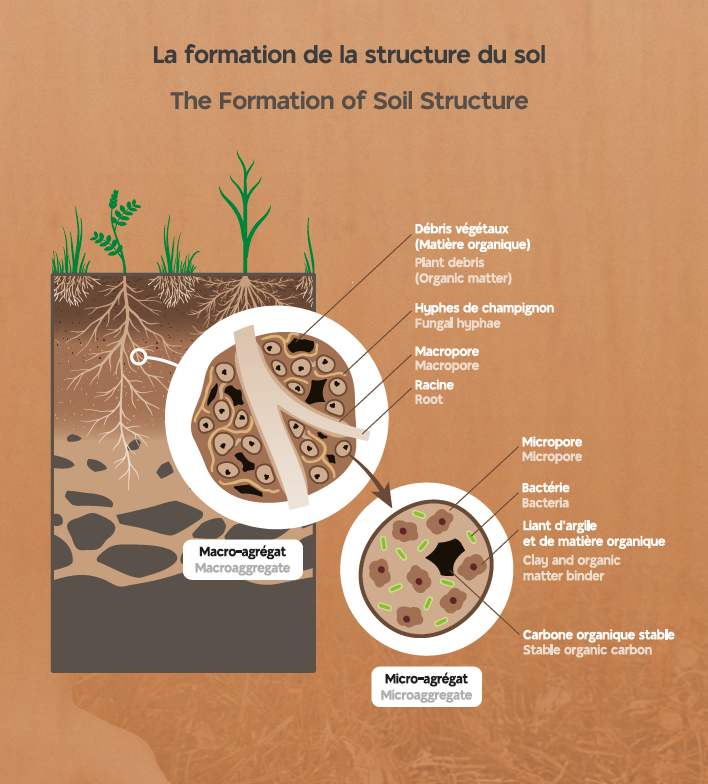
7 modules to explore to understand agroecology
Crops and practices adapted to climate change
Climate change is having a significant impact on agriculture through phenomena such as droughts or, conversely, waterlogged soil and an increase in insect pests.
Farmers need to explore appropriate solutions, whether by selecting more suitable species and varieties or by adopting specific techniques.
How can we produce efficiently in a context of climate change?
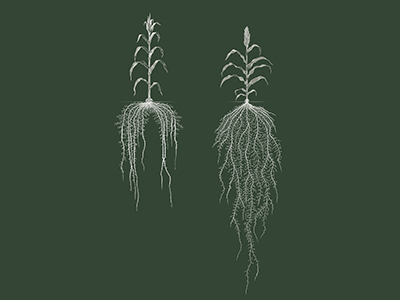
Soil: an ally of biodiversity, climate, and our food supply
Soil is a precious resource, rich in biodiversity, including bacteria, fungi, and a diverse range of fauna.
It provides farmers and society with many services, such as fertility for food production, carbon storage, water purification, erosion control, and more.
Find out how it works and what practices promote its conservation here.
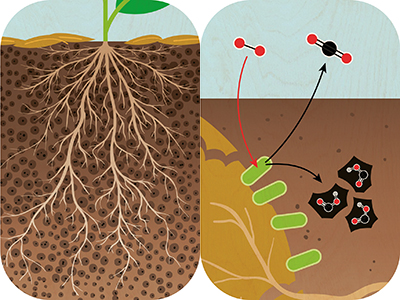
Designing agrosystems that benefit the climate and biodiversity
The agroecological transition is underway!
New practices that limit both greenhouse gas emissions and the impact on biodiversity without reducing production already exist, and others are yet to be invented.
What are these practices and how can they be implemented?
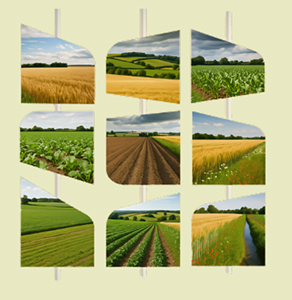
Producing milk while mitigating climate change
Agriculture also involves livestock farming.
Livestock farming offers multiple ways to improve the functioning of a farm (soil fertility management, crop diversification, grassland maintenance, etc.).
It is also a source of greenhouse gas emissions, which can be reduced under certain conditions: animal welfare, choice of pasture, etc.
Discover livestock farming practices that promote milk production and reduce greenhouse gas emissions.
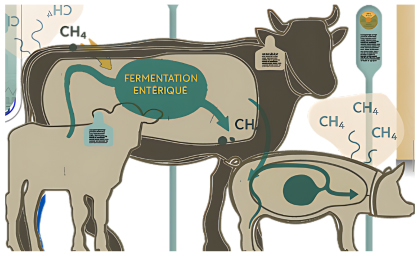
Recycle effluents and waste to produce renewable energy and fertilize crops
Methanization makes it possible to convert animal waste, plant residues, and bio-waste into renewable energy on the farm.
Here, you will discover this natural biological process, similar to the digestion of ruminant animals such as cows.
Get to the heart of the matter by understanding how it works and what it produces: biogas (methane), but also heat and digestate rich in nutrients that are beneficial to plants.
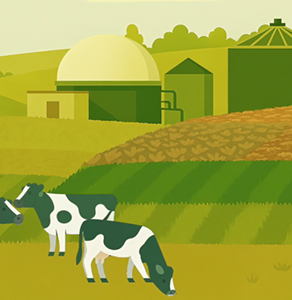
Farming with nature: the functions and services of agroecological infrastructure
These agroecological infrastructures can be beneficial in combating pests and coping with climate hazards.
They contribute to the stability of agricultural production and the preservation of biodiversity.
What roles can these infrastructures play? How can they be implemented and managed? Discover agroecological engineering.
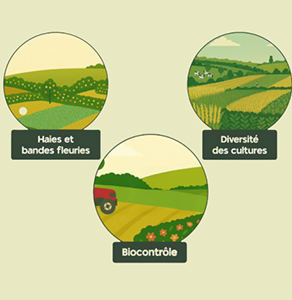
Precision agriculture and new technologies at the heart of the agroecological transition
Module accessible only as part of middle school or high school field trips.
This final module takes students to AgriLab, UniLaSalle's FabLab. Students discover how technological innovations, from low tech to high tech, support the agroecological transition: equipment adaptation, data collection via embedded sensors, prototyping, modeling.
The goal? To understand how technology can be used to better observe, measure, and optimize agricultural practices while reducing inputs.
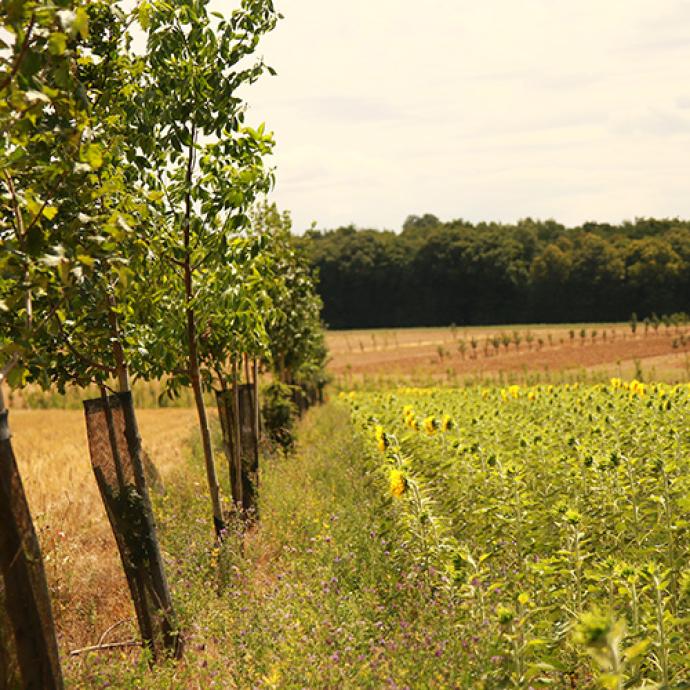
The UniLaSalle campus offers a variety of facilities and tools connected to this scenario:


Several visiting options
You are a socio-economic actor interested in continuing education
Whether you are visiting alone or with your family
The exhibition is open to the public during our Open House days.
Can't come to us? Book our traveling exhibition!
| Permanent scenography | Traveling scenography | |
| Tour route | Yes | Yes |
| Duration of the visit | 1 half-day (approximately 2 hours and 15 minutes) | 1 hour (recommended time) |
| Number of modules | 6 + 1 at AgriLab (UniLaSalle FabLab) | 8 |
| Number of manipulations | 1 to 3 per module | 1 per module |
| Quiz | Yes | No |
| Scientific concepts | Detailed | Synthetic |
| Presentation of professions | In the form of a role-playing game | In the form of information panels |
| Science communication | Yes (mediator present throughout the visit) | No (mediator present only at the time of installation) |
Would you like to book our traveling exhibition?
Contact us by email or by phone at 03.44.06.26.47.
They helped finance the set design.
Co-funded by the European Union



They collaborated in its creation.